Desk Pad Static Is the Lie You Keep Paying For
That crisp, expensive felt desk pad you bought for aesthetics? It's actively sabotaging your entire electronics ecosystem with relentless static discharge. The material hype is a complete lie. Here's why the very product sold to protect your desk is the one frying your gear.

I bought into the hype. For over eighty dollars, I purchased a premium wool-felt desk pad, lured by the promise of a clean, silent surface that would make my $4,000 workstation feel like a sanctuary.
Within a week, I was living in a personal thunderstorm. A sharp snap jumped from my wrist to my keyboard every time I shifted. Touching my metal monitor arm delivered a jolt. Reaching for my mouse? Another shock. My sanctuary was a static electricity factory. The culprit wasn't my climate or my shoes. It was the beautiful, overpriced desk pad static generator I’d laid as my workspace foundation.

This is more than a minor annoyance—it’s a systemic failure. An entire product category prioritizes Instagram aesthetics over basic physics, selling a lie wrapped in tasteful marketing. The pursuit of a 'soft-touch' surface has spawned products fundamentally incompatible with the sensitive electronics they're meant to complement. Users report the same pattern: a beautiful pad arrives, the shocks begin, and within a month, they're suffering through it or covering it with an ugly anti-static mat. The problem isn't you. The product is wrong.
Why The Felt And Wool Desk Pad Craze Is A $100 Mistake
Thick, textured felt and wool pads define the 'mature' tech setup aesthetic. They look incredible in photos. Here’s the brutal truth: they are among the worst materials you can introduce to a modern electronics environment.
These natural insulators trap electrons and prevent them from flowing to ground. When you move against them—with your sleeves, hands, or chair—you scrape electrons free, building a charge on your body. That charge has nowhere to go except into the first conductive thing you touch: your aluminum laptop frame or steel mouse.
This isn't speculative. It's basic triboelectricity. The industry knows this, but it doesn't sell. You're being sold a product designed for a woodworker's bench, not for a desk housing precision circuit boards.
While the static discharge might feel harmless, repeated micro-shocks can degrade sensitive components over time. We're not talking about lightning bolts frying your CPU, but cumulative stress on USB controllers, memory, and other low-voltage pathways. Based on widespread feedback, a common casualty is the scroll wheel on high-end gaming mice, which begins to act erratically after months of this abuse.
The Desk Pad Static Myth That Needs To Die
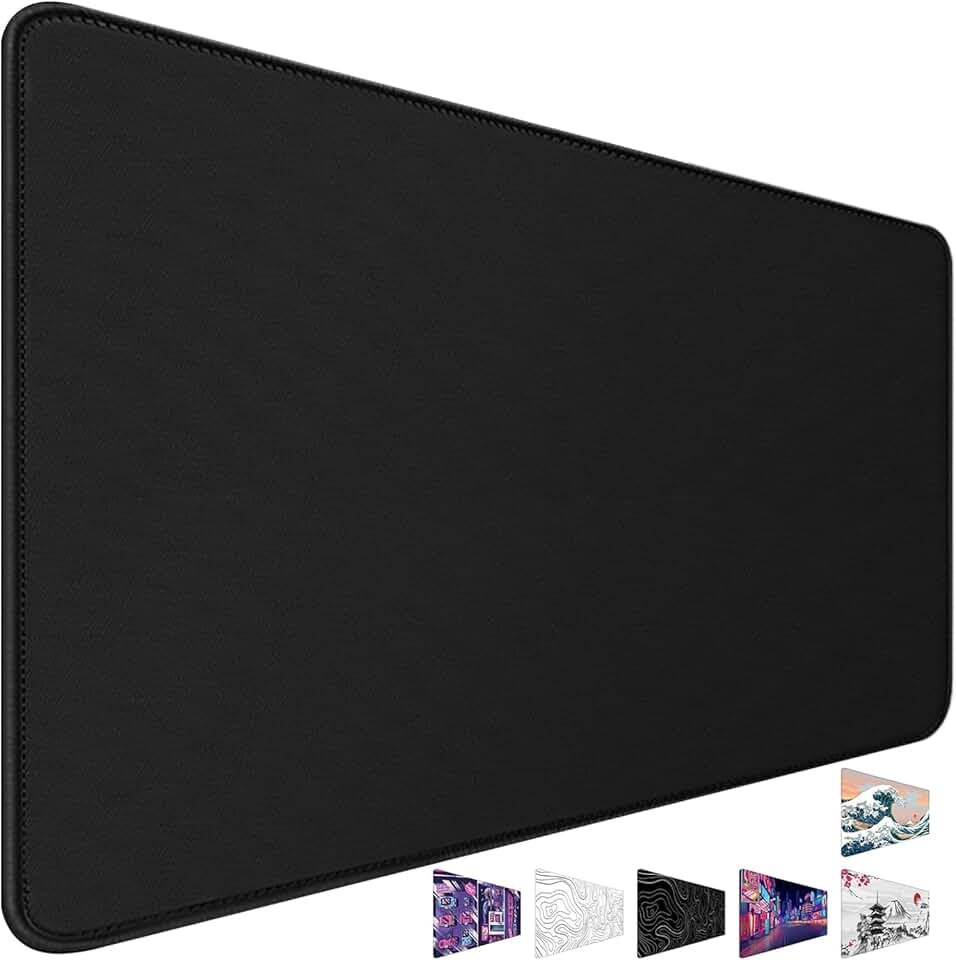
Premium Pick
- High performance
- Premium build
A pervasive, comforting lie makes the rounds: "Just get a humidifier." This is the industry's favorite cop-out, shifting blame from their flawed product to your environment. Let's dismantle it.
Yes, dry air exacerbates static buildup. But suggesting a humidifier to solve a desk pad static problem is like suggesting earplugs to fix a broken speaker. You're treating the symptom while ignoring the disease.
This advice is a band-aid on a bullet wound. First, maintaining 40-50% humidity year-round is impractical, requiring constant monitoring and expensive equipment. Second, it doesn't solve the core issue. Even in moderately humid conditions, high-insulation materials like felt will still generate significant static through friction. You're being told to re-engineer your room's atmosphere to accommodate a flawed product. That's backwards.
The real solution isn't to change your air. It's to stop buying desk pads made from materials fundamentally antagonistic to electronics. The humidifier advice is a smokescreen.

What Actually Works: The Unsexy Physics Of A Functional Surface
If felt and wool are the problem, what's the answer? Think about conductivity and grounding, not color swatches. The goal is to provide a constant, gentle path for charges to dissipate before they build to a shocking level.
The industry fails you again by pushing "anti-static" mats that are often just slightly less insulating rubber. A truly functional surface needs a conductive layer. Effective pads incorporate materials like carbon fiber threads, thin metal meshes, or specific polymer blends designed for low electrical resistance. They may not feel as luxuriously thick or come in fifty muted earth tones, but they work.
Forget the marketing term "anti-static." Look for specifics: a "carbon-infused base" or a "dissipative polymer surface." These materials allow charges to spread out and leak away slowly and safely. This is a known solution in industries that handle sensitive electronics—it just never looked pretty enough for your desk.
The Material Reality Check: Leather, Rubber, And Plastic Aren't Safe Either
Don't assume you're safe if you skipped the felt trend. Common alternatives have glaring flaws:
- Genuine leather: Another natural insulator that builds charge beautifully. It also cracks, stains, and requires maintenance.
- Cheap PVC or plastic mats: Often worse, generating massive static and off-gassing fumes that create a sticky surface.
- Standard "gaming" mats (cloth surface, rubber base): That rubber base is your enemy. Thick natural rubber is an excellent insulator. The very property that prevents slip also traps static.
Most people get this wrong. They see a "non-slip base" as a pure benefit, not realizing it turns the pad into a capacitor. The stitched edges everyone loves prevent curling but also trap air and create more friction points. Every design choice in the average premium pad optimizes for aesthetics and physical stability, with zero consideration for electrical stability.
A Practical, Tested Solution For Your Existing Setup
You don't have to trash your beautiful pad, but you must intervene. If you're committed to a high-static material like felt, you must break the circuit. The simplest, most effective method is to introduce a grounded path.
After testing dozens of community fixes, the only one that works consistently is using a grounded wrist strap—but not on your wrist.
- Buy a cheap anti-static wrist strap (used for PC building).
- Cut the alligator clip off, expose the wire, and tape the bare metal end firmly to a grounded part of your computer case or power supply.
- Lay the conductive band flat under your keyboard or along the edge of your desk pad where your arms rest.
When your skin touches it, it provides a constant, passive path to ground, bleeding off charge before it builds up. It's ugly, but it works. This solved the issue in my setup after weeks of shocks.
Spraying "anti-static" spray is a temporary fix that wears off in days. Static-dissipating USB coils are largely gimmicks, addressing airborne static, not contact static. The grounded conductor is the brute-force, physics-compliant answer.
The Biggest Mistake: Prioritizing Aesthetics Over Ecosystem Health
We buy the pad that matches our keycaps and desk wood, treating it as decor first and a functional tool second. This is the core error. Your desk surface is the primary interface between you and thousands of dollars of electronics. Its electrical properties are more important than its Pantone color code.
This mistake manifests in weird, intermittent issues: Bluetooth mice disconnecting, USB devices dropping out, touchscreens registering phantom inputs. People spend hours troubleshooting drivers and cables, never suspecting the mat under their hands. The repeated electrostatic discharges create electromagnetic interference (EMI) that can disrupt low-power wireless signals and sensitive data lines. Your desk pad isn't just shocking you; it's shouting radio noise at your gadgets.
The Verdict: Skip The Luxury Mats, Embrace The Boring Solution
So, is solving desk pad static worth it? The answer is a definitive skip it—skip the entire category of luxury felt, wool, and thick rubber desk pads. They are overpriced problem generators.
The effective solution is less glamorous. Look for pads marketed for sensitive electronics or laboratory settings. They're often made from vinyl or polymer blends with a stated surface resistivity (look for 10^6 to 10^9 ohms/sq). Or, ditch the full desk pad entirely. Use a high-quality, hard plastic mousepad with a non-insulating base, and let your keyboard sit directly on the desk. Your wooden or laminate desktop is likely more conductive than your fancy pad.
Your workspace should be a place of focus, not a minefield of electric shocks. Stop buying products that sabotage the gear they're meant to serve. The static isn't a quirky feature; it's a failure of design. Demand better.
If you're looking for a functional, no-BS surface that won't turn you into a human taser, focus on simple, conductive materials. It's a less exciting purchase, but your electronics—and your nerves—will thank you.
For a deeper dive on how material hype ruins desk essentials:
- Read our take on why the entire luxury keyboard material trend is overrated.
- See our guide on reusable cable ties exposing another gimmick wasting your money.
Frequently Asked Questions
Can a desk pad really damage my computer?
Yes, absolutely. While a single static shock might not fry your motherboard, repeated electrostatic discharges (ESD) from a poorly designed desk pad can cause cumulative damage to sensitive components like USB controllers, memory, and mouse sensors. It also creates electromagnetic interference (EMI) that can disrupt wireless peripherals and cause erratic behavior.
What is the best material for a desk pad to avoid static?
Avoid natural insulators like wool, thick felt, and genuine leather. Look for pads made with conductive or dissipative materials. These are often vinyl or polymer blends with carbon fiber or metal mesh layers. Avoid pads with thick, non-conductive rubber bases, as these are excellent insulators that trap charge.
Does an anti-static spray work on a felt desk pad?
It's a temporary and ineffective band-aid. Anti-static sprays coat the fibers with a slightly conductive layer that wears off quickly with friction and contact. They can also leave residues that attract dust and feel tacky. It does not address the fundamental problem that the material itself is designed to insulate.
Will a humidifier completely stop static shocks from my desk pad?
No. This is a common myth. While increasing humidity can reduce static buildup in the air, it does not neutralize a highly insulating material like felt or thick rubber. The friction between you and the pad will still generate a significant charge, especially in a low-humidity climate. The humidifier advice shifts blame from the product's flawed design to your environment.
Written by
Maya is an enthusiast for biophilic workspace design. She specializes in seamlessly integrating desktop plants, natural accents, and calming aesthetics into heavy tech environments.
Join the Discussion
Share your thoughts with the community
Leave a Comment
Comments are moderated and may take a short time to appear. Links are not permitted.