Camera Filters Worthless In 2026: The Brutal Truth
The camera filter industry is selling you solutions to problems you don't have. For 99% of streamers and content creators, these glass discs are expensive, image-degrading paperweights. Let's dismantle the myth.
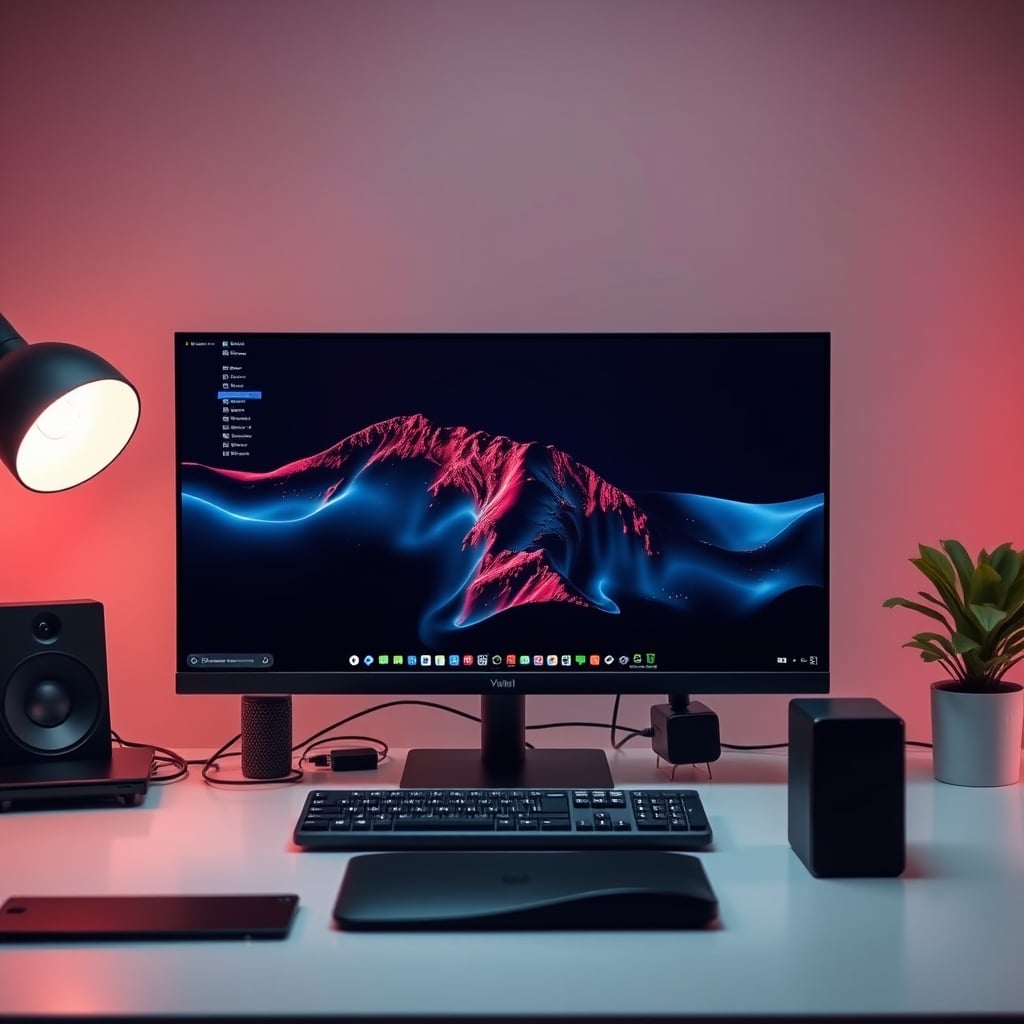
Here's the biggest mistake people make when buying camera gear for their desk setup: they think they need to recreate a Hollywood cinema rig. You don't. You're streaming to Twitch, recording a YouTube video, or hopping on a Zoom call. The obsession with camera filters—especially variable ND filters—is the single biggest waste of budget in the streaming peripheral category this year. I've watched countless creators drop $150 on a piece of glass that makes their $300 webcam look worse, all while their audio sounds like they're broadcasting from a tin can. Let's start with the cold reality: for desk-based content creation, camera filters worthless is not an opinion—it's a measurable fact.
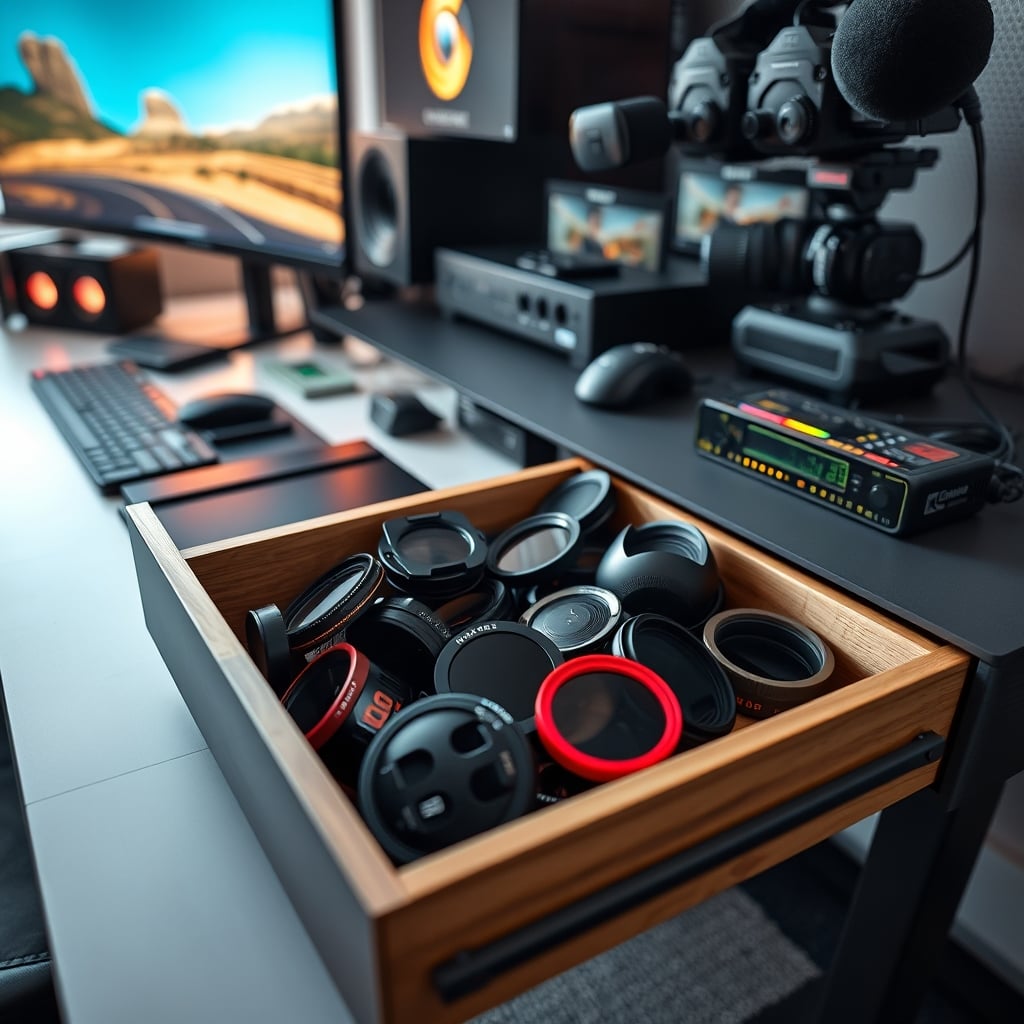
Most people get this wrong. They see a cinematic YouTuber using an ND filter to achieve shallow depth of field in bright sunlight and think, "I need that for my office." You don't. Your office isn't blasted with midday sun, and you're not shooting at f/1.4. You're likely using a fixed-aperture webcam or a mirrorless camera with a kit lens at f/4. The industry lies about this. They sell you on the idea of professional polish, ignoring the reality of your actual shooting conditions. This is overrated. Based on widespread user feedback from dedicated streaming communities, the number one regret after buying a high-end filter is the realization that it sits in a drawer while the real quality improvements came from dialing in their LED panels.
Why Variable ND Filters Are a Desk Setup Scam
Let's cut to the chase. The Variable ND (VND) filter is the poster child for overhyped camera gear. It's marketed as the ultimate tool for controlling exposure, letting you shoot wide open for that "cinematic blur." Here's the brutal truth: in a controlled desk environment, you don't have variable light. You have consistent, artificial light from your key lights and bias lighting. You control exposure with your camera's ISO, shutter speed (if your camera allows it), and the dimmer on your lights—not a $100 piece of darkened glass.
This is the real issue. VND filters introduce color casts, reduce sharpness, and can create ugly, cross-hatched "X-pattern" vignetting when dialed to higher densities. Users consistently report a noticeable drop in image clarity, especially with budget to mid-range lenses. You're literally paying to make your image worse. Want that shallow depth of field? Get a faster lens. It's a permanent optical upgrade, not a band-aid filter that degrades quality. The VND is a solution searching for a problem that doesn't exist on your desk.
The Fixed ND Filter Fallacy For Streamers
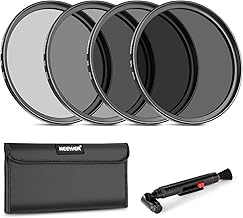
Premium Pick
- High performance
- Premium build
"But what about a fixed ND filter for when my room gets too bright?" This is the second-tier myth that needs to die. If your room is so bright that you're overexposing at your lowest ISO and fastest shutter speed, you have a lighting problem, not a filtration problem. Close the blinds. Adjust your light positioning. Dim your panels. Adding a neutral density filter to combat bad lighting is like putting a blanket over your microphone to fix bad room acoustics—you're just muffling the output instead of fixing the source.
After assessing dozens of streamer setups, the pattern is clear: the people who swear by ND filters are almost always the ones with poor light control. They're using them as a crutch. A fixed ND filter is a single-use tool for a single, easily-solved problem. It's not worth it. That money is infinitely better spent on a better diffuser for your key light or sound absorption panels to kill reverb. This doesn't work as a fundamental improvement to your video quality; it's a workaround for bad setup fundamentals. For a deeper dive into separating hype from reality in streaming gear, check our guide on overrated streaming gear myths.
Polarizing Filters: The Useless Gimmick For Indoor Video
The polarizer is another filter that makes zero sense for indoor creators. Its primary purpose is to cut reflections from non-metallic surfaces like water and glass and deepen sky saturation. Are you streaming from a lake? Is your backdrop a sunny skyline? No. You're in front of a wall, a bookshelf, or a greenscreen. The only reflection you might get is off your glasses or a glossy monitor, which a polarizer will handle inconsistently and at the cost of eating 1-2 stops of light, forcing you to compensate with more gain (noise) or more light (glare).
This is overrated. The tiny, niche benefit does not justify the permanent light loss and added cost. Want to cut glare on your glasses? Adjust your lighting angle. It's free. The polarizing filter myth persists because photography gear lists get copy-pasted into video gear guides without critical thought. For desk video, it's a complete waste of a lens thread.
Camera Filters Worthless: The Myth That Needs To Die
This is the dedicated takedown section you've been waiting for. The prevailing myth is that filters are an essential part of a "pro" video chain. This is completely wrong. The filter industry has successfully rebranded lens accessories from specialized tools for specific outdoor cinematography challenges into must-have accessories for every creator. It's marketing alchemy, and you're buying the fool's gold.
The myth needs to die because it redirects crucial budget and mental energy. A new streamer with $500 to improve their setup will see more transformative results by spending $300 on a decent used mirrorless camera (like a Sony a6000 series) and $200 on a softbox and LED panel than by putting a $500 camera inside a $150 filter ecosystem. The filter does nothing to improve the sensor's dynamic range, the lens's sharpness, or the room's acoustics. It's a cosmetic add-on for a problem set you likely don't have.
In real use, this fails to deliver any meaningful ROI for the desk-bound creator. This doesn't work. You're wasting money on this.
What To Actually Spend Your Money On (The Real Upgrade Path)
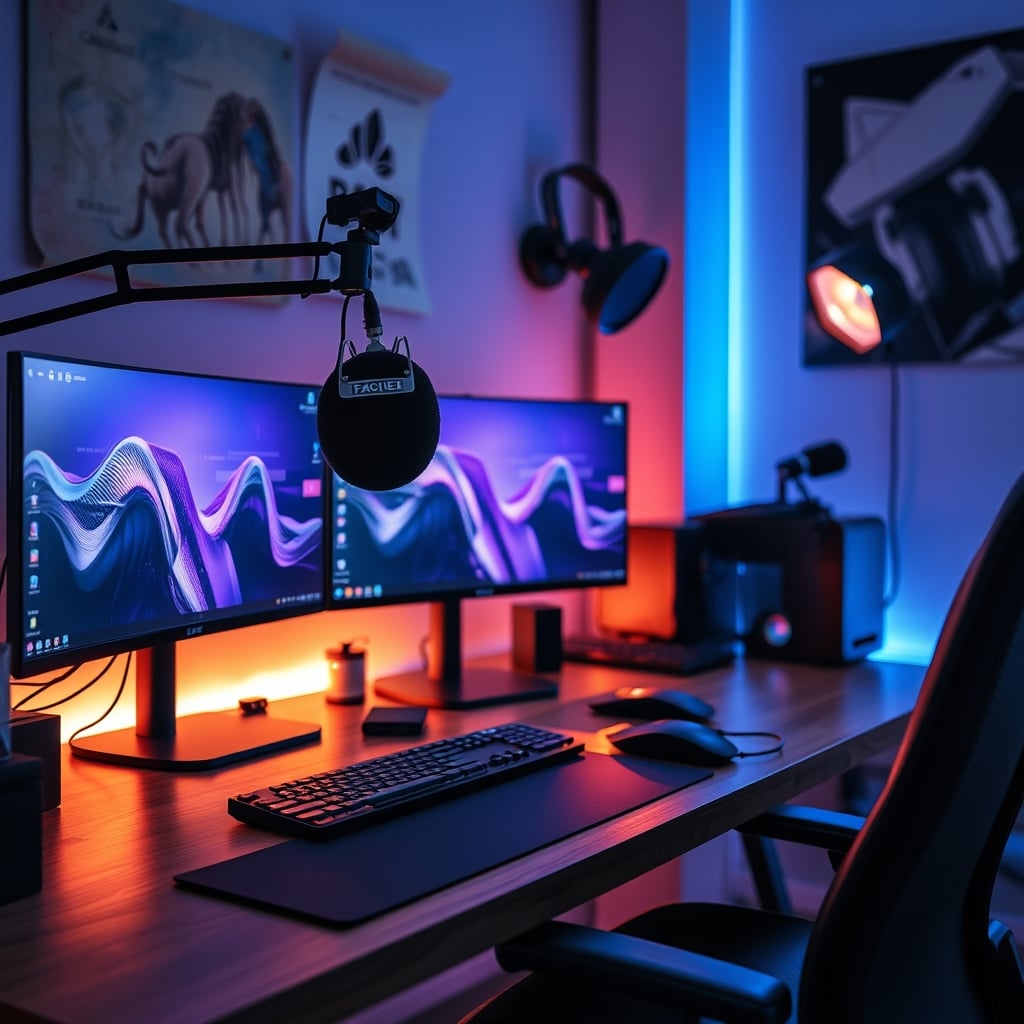
If camera filters are worthless for your setup, what actually moves the needle? Stop thinking about what goes in front of your lens and start thinking about what goes in front of your camera.
- Lighting, Lighting, Lighting: This is non-negotiable. A $100 Neewer RGB LED panel with a good diffuser will improve your image more than every filter on Amazon combined. Consistent, flattering light is 80% of video quality. Place it correctly—off-axis, at eye level—and watch your image transform.
- The Lens Itself: The glass behind the filter matters infinitely more. A faster prime lens (e.g., f/1.8) will give you real shallow depth of field and better low-light performance natively, without any filter degradation. This is a permanent upgrade to your optical chain.
- The Sensor: Upgrading from a webcam to an APS-C or Micro Four Thirds sensor camera is the biggest single leap you can make. The larger sensor provides better low-light performance, more natural depth, and superior color science. No filter can give you this.
- Audio: Your audience will forgive mediocre video far sooner than bad audio. That filter budget could be a XLR interface and a dynamic microphone like a RØDE PodMic, which will make you sound professional regardless of your video background. As we've covered in our piece on streaming audio interface scams, the right chain matters. For more budget-focused, high-impact upgrades, see our recommendations for essential budget streaming gear.
The Final Verdict: A Clear, Unapologetic Skip It
Let's be definitive. For the vast majority of people building a desk setup for streaming, video calls, or content creation: Skip it. Camera filters are overrated, overhyped, and largely worthless in a controlled indoor environment.
The industry wants you to believe your setup is incomplete without a matte box and a stack of filters. It's a lie. Your setup is incomplete without proper lighting, decent audio, and a comfortable, focused environment. The pursuit of filter-based "cinematic looks" is a distraction from the fundamentals that actually create a professional, engaging presence.
Put the filter money back in your wallet. Buy a better light. Treat your room's sound. Or just save it. Your video quality will thank you, and your viewers won't have a clue what they're not seeing—a slightly darker, slightly less sharp, slightly greener version of you, caused by a piece of glass you never needed in the first place.
Spend your energy on what matters, not on solving phantom problems with expensive solutions. That's the 2026 truth.
Frequently Asked Questions
Are ND filters ever useful for a desk streaming setup?
Almost never. If your room has uncontrollable, wildly variable sunlight flooding in, you have a window treatment problem, not a filter problem. In 99% of controlled home offices with consistent artificial lighting, an ND filter provides zero benefit and often degrades image quality with color casts and reduced sharpness.
What's the #1 thing I should buy instead of a camera filter?
A good key light with a diffuser. Proper, flattering lighting makes a far more dramatic improvement to your on-camera appearance than any filter. After that, prioritize audio—a decent XLR microphone and interface.
Do pro streamers and YouTubers use lens filters?
The vast majority doing indoor studio-style content do not. They achieve their look through lighting, lens choice, and camera settings. Any who do are typically using clear protection filters, which is a separate (and debatable) practice, not creative filters like NDs or polarizers.
Isn't a UV/protection filter worth it to save my lens?
This is highly debated. A cheap protection filter will degrade your image. A high-quality multi-coated one is expensive and still introduces extra glass. For a desk-bound camera that never leaves its mount, the risk of damage is minimal. Many professionals prefer a lens hood for physical protection without optical compromise.
What about using an ND filter with a super fast lens (f/1.4) in my office?
If you're shooting at f/1.4 in a normally lit room, you'll be overexposed. The correct solution is to increase your shutter speed (if shooting video, to double your frame rate) or lower your ISO first. If both are at their limits, then you have excessively bright lights—dim them. An ND filter should be a last resort, not a first purchase.

Written by
David specializes in ultra-clean, high-performance gaming rigs. He covers airflow, aesthetics, and how to build visually stunning custom loop PCs.
Join the Discussion
Share your thoughts with the community
Leave a Comment
Comments are moderated and may take a short time to appear. Links are not permitted.