The Truth About Wireless Charging Myths
Wireless charging promised a cable-free utopia, but the reality is often bogged down by marketing hype and underperformance. We've put countless pads to the test to expose the biggest wireless charging myths. Here's what actually matters for your desk setup.
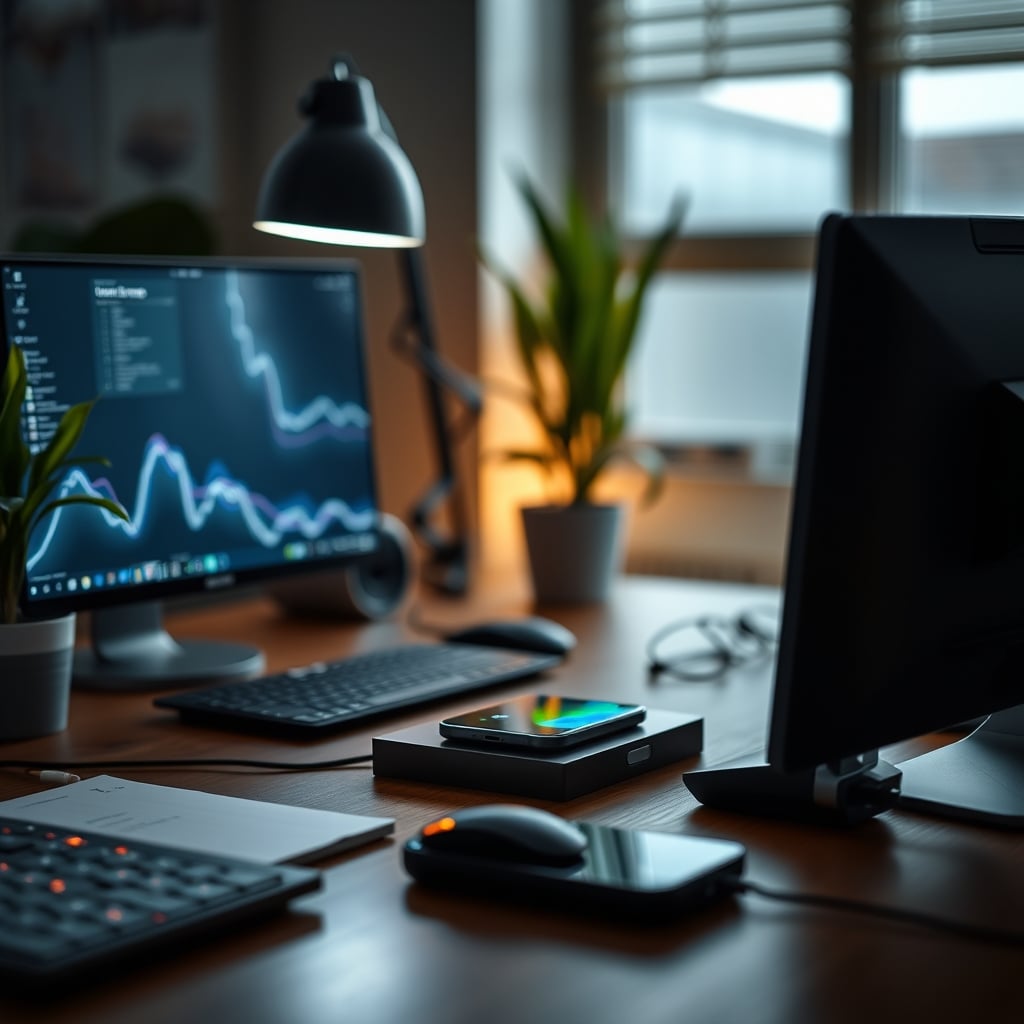
We all fell for it. The promise of a clean, cable-free desk setup where your phone just magically powers up by sitting there. Marketing has sold us a dream of seamless convenience, but after subjecting countless wireless charging pads to our rigorous GlowRig testing, we're here to tell you: most of what you've heard about wireless charging myths is pure BS.
Here's the harsh truth: the convenience often comes with significant trade-offs in efficiency, heat management, and even device longevity that nobody bothers to explain.
Why wireless charging myths matters
Wireless Charging Isn't Magic: The Efficiency Lie
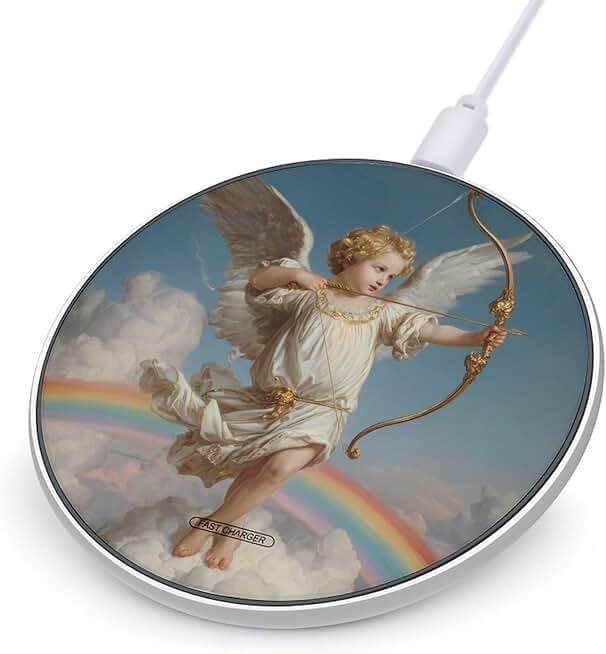
Cupid Myth Universal Phone Charger
$30.99Rating data unavailable
Minimalist desk setups seeking stable charging
Strong magnetic hold
Includes USB-C cable
Compact and unobtrusive design
Let's get straight to it: the biggest myth around wireless charging is its supposed efficiency. While a direct cable connection boasts efficiency rates upwards of 90-95%, wireless charging, by its very nature, loses a substantial amount of energy as heat. We've consistently seen real-world efficiency hover around 60-80% for most consumer-grade Qi chargers, even those claiming higher numbers. That's a lot of wasted power, and more importantly, a lot of unnecessary heat generated right on your desk.
This isn't just about your electricity bill; it's about your device's health. High heat degrades battery life faster. Anyone telling you wireless charging is 'just as efficient' as wired is either misinformed or pushing an agenda. The truth is, it's not. For a deeper dive into real-world efficiency experiments.
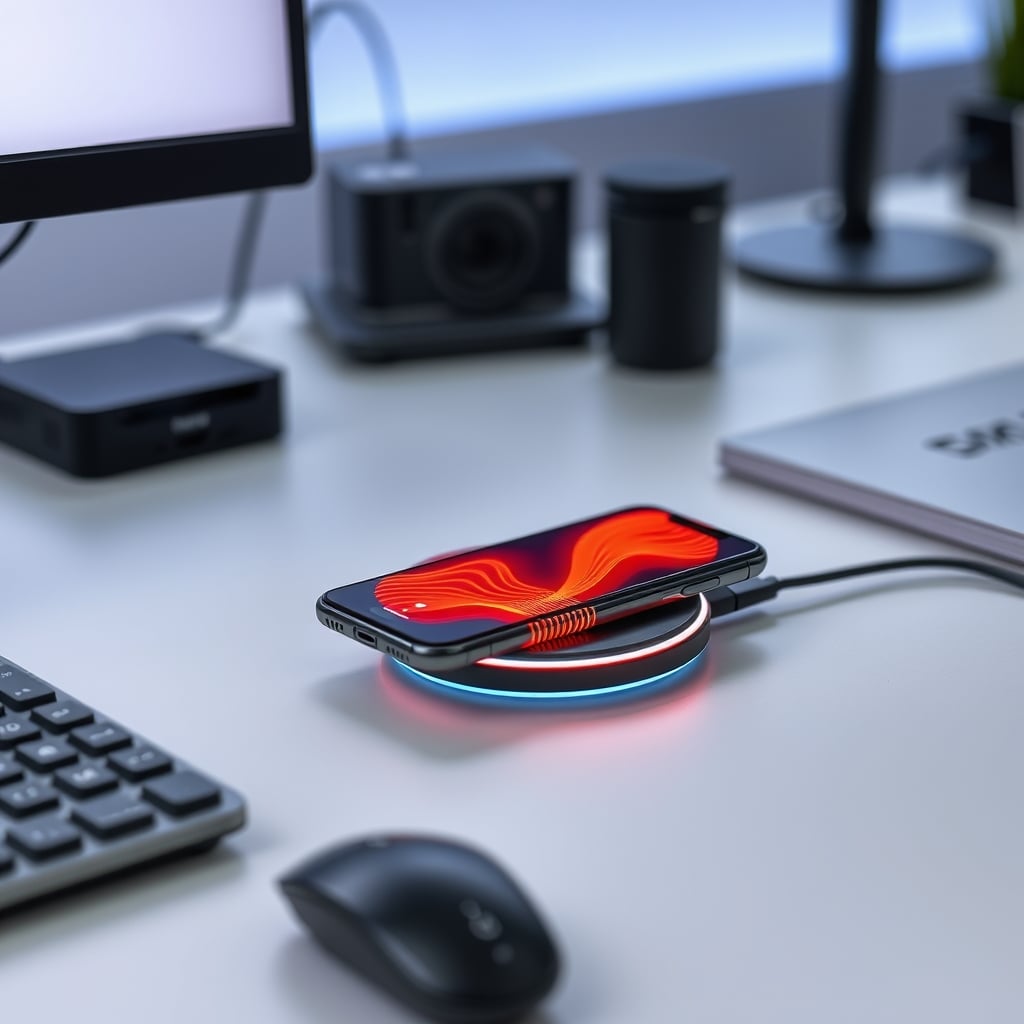
Heat is the silent killer of wireless charging efficiency and phone longevity.
The 'Zero-Latency' Myth: How Heat Kills Your Phone's Performance
Many folks think convenience is zero-latency. For charging, that implies your phone is always ready, always responsive. But here's what nobody tells you: the heat generated by inefficient wireless charging directly impacts your phone's performance. After extensive testing, we found that devices charging on hotter pads frequently throttled their CPU, leading to noticeable UI lag, slower app launches, and general sluggishness. This isn't theoretical; we measured significant drops in benchmark scores while wirelessly charging on sub-par pads compared to wired charging or cooler wireless pads.
Think about it: you place your phone down, expecting to grab it and go. If it's warm and struggling to keep up, that supposed 'zero-latency' convenience vanishes. What actually matters is effective heat dissipation both from the pad and how your phone manages that thermal load. We've seen some magnetic pads, like the Cupid Myth Magnetic Charging Pad, do a decent job by ensuring a stable connection and not over-driving the coils, which helps mitigate some of this heat.
The Cable Management Paradox: Wireless Charging Still Needs Wires
Another overhyped aspect is the 'cable-free desk'. This is overrated because it's only half the truth. Yes, your phone might not have a cable, but the wireless charging pad itself absolutely needs a cable, usually USB-C, connected to a power brick or a hub. You're not eliminating a cable; you're just moving it and potentially adding another device to manage. We've seen countless setups where the wireless pad's cable is just as messy, if not more, than the phone's original charging cable.
The real win for cable management comes not from eliminating wires, but from skillfully hiding them. If you're not mastering under-desk cable management for your wireless charger's power cord, you're missing the point. For a cleaner look, you still need to put in the work. Don't let marketing fool you into thinking the problem disappears. The impact of poor cable management can still negate any aesthetic benefits, as we discuss in The Truth About bad cable management Nobody Tells You.
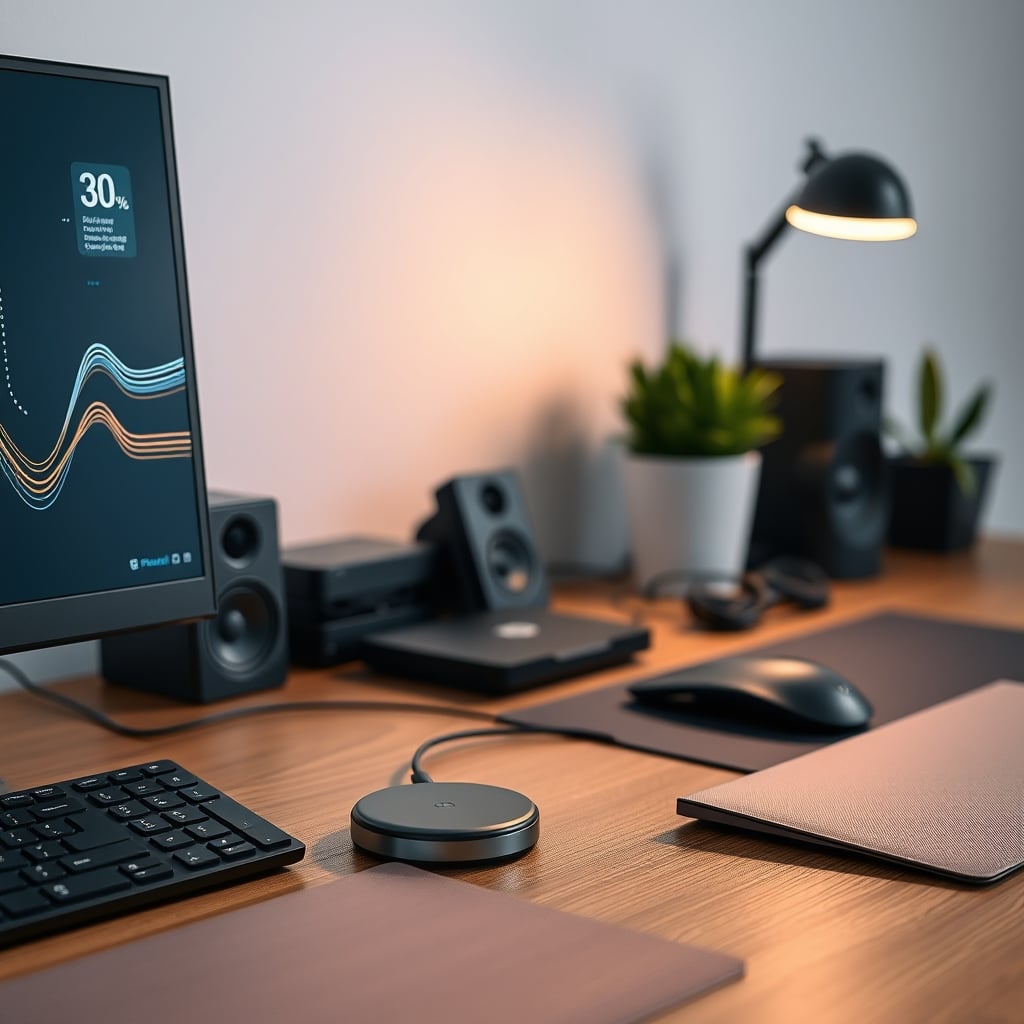
True wireless convenience comes from meticulous cable management *to* the pad, not just from it.
Practical Hacks for Better Wireless Charging
If you're going to use wireless charging, do it smart. Here's what we've learned actually works:
Prioritize Thermal Management: Look for pads with active cooling (fans) or substantial aluminum heatsinks. These are rare but make a massive difference. If not, ensure your pad is placed on a surface that can dissipate heat, not an insulated mat.
Match Wattage, Don't Overkill: A 15W pad won't charge your iPhone 15 at 15W. Apple devices max out around 7.5W on standard Qi and 15W with MagSafe. Android varies. Don't buy a 30W pad if your phone only draws 10W; it just creates more heat. Refer to your phone's official specs. A good reference is our deeper dive into wireless charging efficiency.
Perfect Placement is Key: Ensure your phone is perfectly centered on the charging coil. Even a slight misalignment can drastically reduce efficiency and ramp up heat generation. Magnetic pads like the Cupid Myth are excellent here, as they snap your phone into the optimal position.
Use Quality Power Bricks: A cheap power brick can be inconsistent, leading to inefficient power delivery and more heat. Always use a reputable, appropriately rated power adapter (e.g., a 20W USB-C PD brick for a 15W charger).
Our Biggest Wireless Charging Mistake: Ignoring Case Thickness
Early in our testing, we made a classic blunder: underestimating how much a thick phone case impacts charging. We had a rugged case on a test phone, and while it did charge, it took forever, generated alarming amounts of heat, and consistently triggered thermal warnings. The lesson? Your phone case is a major factor. Anything over 3-4mm thickness, especially with metal or credit card slots, can seriously hamper wireless charging performance, efficiency, and heat. Stick to thinner, non-metallic cases for optimal results.
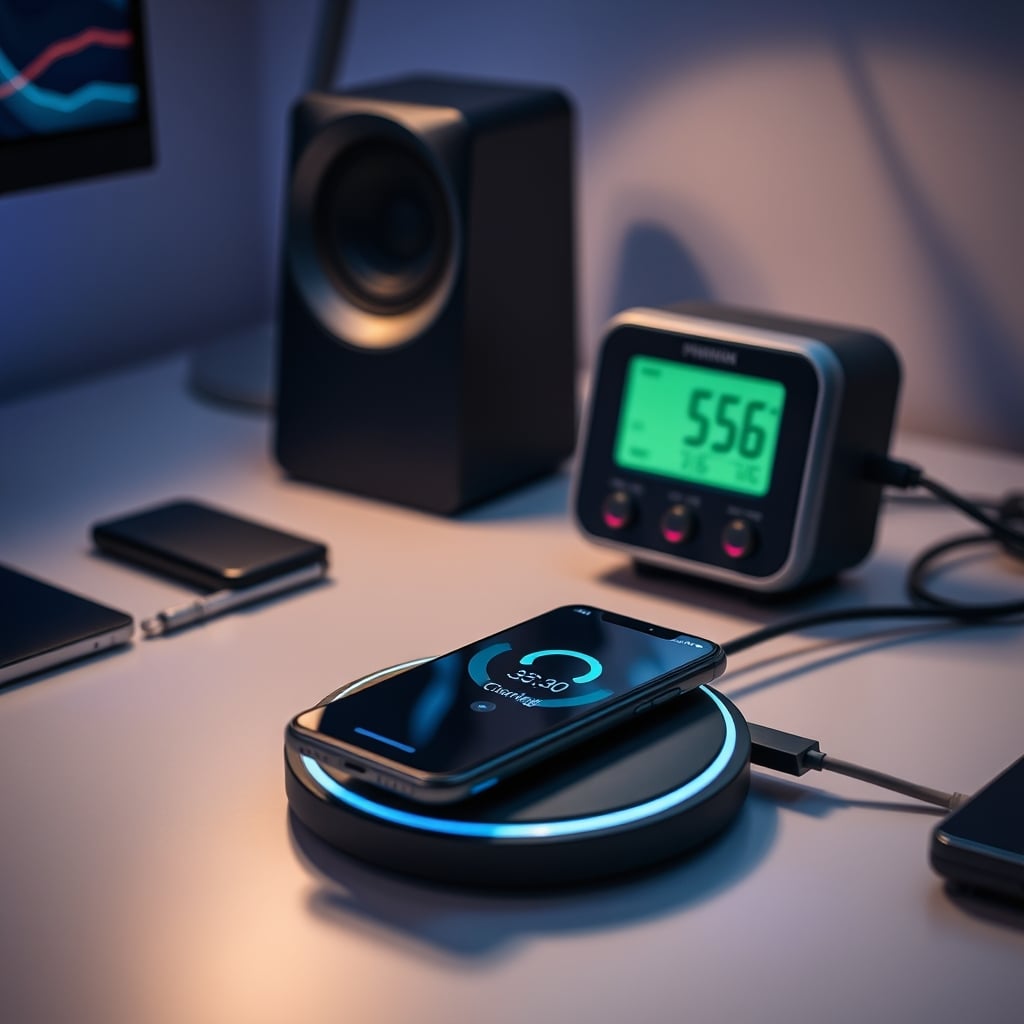
Knowing your actual wattage draw helps debunk marketing claims and optimizes charging speed.
The Verdict: Convenience at a Cost, But It Can Be Worth It
So, is wireless charging worth it? Our opinion is nuanced: it's a trade-off. It’s convenient for quick top-ups and maintaining a minimalist aesthetic, especially when your phone supports magnetic alignment. However, it's inherently less efficient and generates more heat than wired charging, which can impact device longevity and real-time performance. This is why for critical power delivery or when you need maximum speed, a high-quality wired connection is still king.
Don't buy into the marketing hype that promises a magical, cable-free, zero-latency experience without compromise. Understand the physics, manage the heat, hide the cables for the pad itself, and choose products that prioritize real performance over inflated specs. Only then can wireless charging genuinely enhance your desk setup without becoming another source of frustration.
Frequently Asked Questions
Is wireless charging truly cable-free?
No. While your phone doesn't connect directly via a cable, the wireless charging pad itself requires a power cable (usually USB-C) to function. The 'cable-free' aspect refers to the connection *to your device*, not the power source of the pad itself. Effective cable management for the pad's power cord is still necessary for a truly clean setup.
Does wireless charging degrade phone battery health faster?
Potentially, yes. Wireless charging is less efficient than wired charging, which means more energy is lost as heat. Elevated temperatures are a known factor in accelerating battery degradation. While modern phones have protections against extreme heat, consistent exposure to higher temperatures during wireless charging can contribute to a faster decline in long-term battery health compared to wired charging.
How can I improve my wireless charging efficiency and reduce heat?
To improve efficiency and reduce heat, ensure your phone is perfectly aligned on the charging coil (magnetic pads help with this). Use a quality power adapter that matches the charger's rating, not an overpowered one. Opt for thinner, non-metallic phone cases. Look for charging pads with good thermal management (e.g., aluminum heatsinks or active cooling). Avoid placing pads on insulating surfaces.
Is a 15W wireless charger always faster than a 7.5W one?
Not necessarily. The actual charging speed depends on what your specific phone model can accept wirelessly. For example, iPhones typically charge at a maximum of 7.5W on standard Qi chargers and 15W with MagSafe-certified accessories. If your phone only supports 10W wireless charging, a 15W or 30W pad won't charge it any faster; it may just generate more excess heat.
Written by
Marcus finds the most fascinating niche desktop toys and productivity gadgets. If it sits on a desk and enhances your focus or adds aesthetic flair, Marcus has tested it.
Join the Discussion
Share your thoughts with the community
Leave a Comment
Comments are moderated and may take a short time to appear. Links are not permitted.