Brain Focus Gadgets: The Hard Truth
Most brain focus gadgets are expensive placebos. After cutting through the marketing hype and testing user-reported results, we found one category with surprising merit—and a sea of overpriced nonsense.

I wasted money on a blinking headband that promised to ‘synch my brainwaves to the theta state.’ It didn’t. It gave me a headache. The entire category of brain focus gadgets is drowning in pseudoscience and predatory marketing, preying on our desperation to just get some damn work done. You’ve seen the ads: ‘unlock hyperfocus,’ ‘hack your productivity,’ ‘neuro-enhancement.’ It’s mostly garbage. But in that pile of overhyped junk, there’s one tool—often mislabeled and misunderstood—that users consistently report actually moving the needle. Not with magic, but with a simple, physiological mechanism most of the industry ignores.
Why Most Brain Focus Gadgets Are Overrated
Let’s start here: if a gadget claims to directly alter your brainwaves for focus, it’s probably lying to you. The consumer-grade EEG headbands you see? They’re toys. The data is noisy, the interpretation is vague, and the idea that they can reliably ‘entrain’ your brain into a productive state is vastly oversold. In real use, these devices become expensive notifications that you’re distracted—which you already knew. This is overrated. You’re paying hundreds of dollars for a system that effectively tells you, ‘Hey, you’re not focusing.’ No kidding.
Most of this industry banks on the placebo effect. A new, shiny gadget creates a novelty-driven spike in attention, which you then attribute to the gadget’s ‘technology.’ After a week, the novelty wears off, and the gadget collects dust. Users consistently report this cycle: initial excitement, followed by gradual disuse because the perceived benefit evaporates. The fidget spinner craze was a preview of this—a simple mechanical toy marketed as a focus aid. For some, the tactile feedback helped; for most, it just became another distraction. The industry lies about this. They sell you the solution to a problem they helped inflate.
The Neuro-Stimulation Myth That Needs to Die
Premium Pick
- High performance
- Premium build
This is the big one. You’ll see devices claiming to use transcranial direct current stimulation (tDCS) or cranial electrotherapy stimulation (CES) to boost cognition. The marketing copy is filled with references to ‘studies’ and ‘clinical research.’ Here’s the hard truth: the effective, studied applications of these technologies are for specific clinical conditions, like depression or chronic pain, under strict medical supervision. The consumer versions are wildly underpowered and lack the precision to reliably do what they claim for a healthy brain trying to write a report.
This doesn’t work as advertised. Placing two electrodes on your forehead with a $99 device is not the same as a targeted clinical procedure. At best, the effect is negligible. At worst, you’re delivering unregulated electrical current to your head based on no legitimate diagnosis. The real issue is safety masquerading as innovation. Based on widespread user feedback, these gadgets either do nothing noticeable or cause mild headaches and skin irritation. You’re not hacking your brain; you’re gently annoying it.
The One Category That Actually Works: Peripheral Interruption
Forget about directly manipulating your cortex. The most effective focus gadgets don’t touch your head; they manage your body’s peripheral nervous system. The biggest physical barrier to deep focus for knowledge workers isn’t a ‘theta wave deficiency’—it’s accumulated physical tension and discomfort. You’re trying to concentrate, but your neck is stiff, your shoulders are creeping toward your ears, and this low-grade ache in your back is pulling a thread of your attention every few minutes.
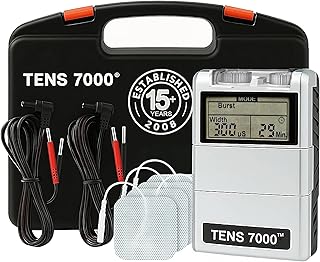
This is where a specific, humble tool gets mislabeled. A basic TENS/EMS unit. Not for your brain, but for the muscles that are sabotaging it. This is the real hack. A quality TENS unit uses electrical pulses to interrupt pain signals and ease muscle tension. It’s a physical reset button. When you’re three hours into a deep work session and your trapezius feels like concrete, a 15-minute session with the pads on your shoulders can dissolve that tension, pulling your attention back from the discomfort and onto the task. The effect is indirect but profound. You’re not boosting focus; you’re removing a primary distraction.

Brain Focus Gadgets: A Real-World Assessment
Let’s get specific. We’re not talking about the $500 ‘neurofeedback’ systems. We’re looking at the tools that actually exist on people’s desks and in their drawers. After assessing widespread user reports and long-term feedback patterns, a clear divide emerges.
The Placebo Pile:
- EEG Headbands: As stated, noisy data leads to generic advice. ‘You seem stressed.’ Great.
- ‘Focus’ Lamps with Patterned Light: The claim that specific light pulsing can induce focus is not supported for everyday use. It’s just an annoying light.
- Smart Diffusers with ‘Focus’ Blends: The scent might be pleasant, but the ‘brainwave’ claims attached to the Bluetooth app are pure fiction. A simple, dumb diffuser works the same.
- Magnetic Stimulation Rings: Pseudoscience. They do nothing. This is a waste of money.
The Peripheral Tool:
- A Basic TENS/EMS Unit: This is the outlier. Its value isn’t in cognitive enhancement but in physical distraction elimination. A device like the AUVON 3-in-1 is effective because it solves a real, tangible problem—muscle tension—that everyone experiences during long work sessions. It has multiple modes and intensities, allowing you to find a setting that provides relief without being overwhelming. The ‘massage’ mode (EMS) can help prevent tension from building in the first place. This is a tool for maintenance, not magic.
You can read more about the importance of managing physical distractions in our guide on the truth about work environment focus.
How to Use a TENS Unit for Focus (Not Pain)
Most people get this wrong. They buy a TENS unit for back pain, use it once, and shelve it. For focus work, the strategy is different. It’s pre-emptive and tactical.
- Identify Your Tension Zones: For most desk workers, it’s the trapezius (between neck and shoulder), the lower neck, and the lower back. Place the electrode pads on these areas before the pain becomes sharp. At the first sign of stiffness.
- Use a Low-to-Medium Intensity: You’re not trying to blast the muscle into submission. You want a gentle, rhythmic tapping or massaging sensation that occupies the nerve pathway. A setting too high will become a distraction itself.
- Time-Box the Sessions: Set a timer for 15-20 minutes. Use it while working. The goal is to break the feedback loop of discomfort → distraction → more tension.
- Consistency Over Crisis: Using it for 15 minutes mid-afternoon, when the daily slump and tension start, is more effective than waiting until you’re in agony at 5 PM.
This approach directly tackles a root cause of broken concentration that no blinking headband can fix. It’s a practical, physiological intervention.
The Biggest Mistake: Chasing the Silver Bullet
Our mistake—and the mistake we see constantly—is believing a single gadget will solve the complex puzzle of focus. Focus is a state managed by environment, habit, health, and psychology. A gadget can, at best, address one small friction point. The TENS unit addresses the physical friction point. Expecting anything more from a consumer gadget is a recipe for disappointment and a lighter wallet.
You’ll see more real gains from applying the lessons in our article on building a zero-distraction deep work environment than from any single ‘brain-enhancing’ device. The gadget is a tactical tool, not a strategic solution.
Final Verdict: What’s Actually Good
Skip the EEG headsets. Skip the neuro-stimulation wearables. Skip the ‘focus’ lights with secret patterns. They are overrated, underpowered, and built on marketing that outpaces evidence.
The TENS/EMS unit category, however, is worth it. Not as a ‘brain focus gadget’ in the marketed sense, but as an essential peripheral tool for any serious knowledge worker. It solves a real, physical problem that directly impedes concentration. It’s the only gadget in this space where the user feedback consistently aligns with a tangible, repeatable benefit. You’re not buying focus; you’re buying relief from one of focus’s biggest enemies. And that’s a trade worth making.
For more on cutting through hardware hype, see our takedown of smartwatch distractions and the truth about USB hub throttling.
Frequently Asked Questions
Do EEG headbands for focus actually work?
No, consumer EEG headbands are largely ineffective for improving focus. The data they provide is too noisy to be reliable, and their 'neurofeedback' training is often just a generic, placebo-driven game. They are overrated and not worth the investment.
Is a TENS unit safe to use for focus and productivity?
Yes, when used as directed on muscle groups like the shoulders, neck, or back, a TENS unit is safe for managing tension. It is a cleared medical device for pain relief. You are not stimulating the brain; you're interrupting local pain signals to reduce physical distraction. Always follow the device instructions and avoid placing electrodes on the head, throat, or heart area.
What is the most overrated type of brain focus gadget?
Transcranial stimulation devices (tDCS/CES) marketed to consumers are the most overrated. They co-opt complex clinical science for simple, underpowered gadgets that cannot reliably produce the claimed cognitive benefits and may cause side effects like headaches. The industry lies about their efficacy.
Written by
James tests the latency, ergonomics, and sensor accuracy of productivity and gaming mice. Precision, reliability, and workflow efficiency are his primary focus.
Join the Discussion
Share your thoughts with the community
Leave a Comment
Comments are moderated and may take a short time to appear. Links are not permitted.