Ambient Light Automation Is Ruining Your Room
I spent a month automating every photon in my room, chasing the promise of effortless ambiance. What I discovered is that most ambient light automation is a fragile, over-engineered distraction that actively works against relaxation. The industry lies about simplicity, and your Hue app is probably making you more anxious.
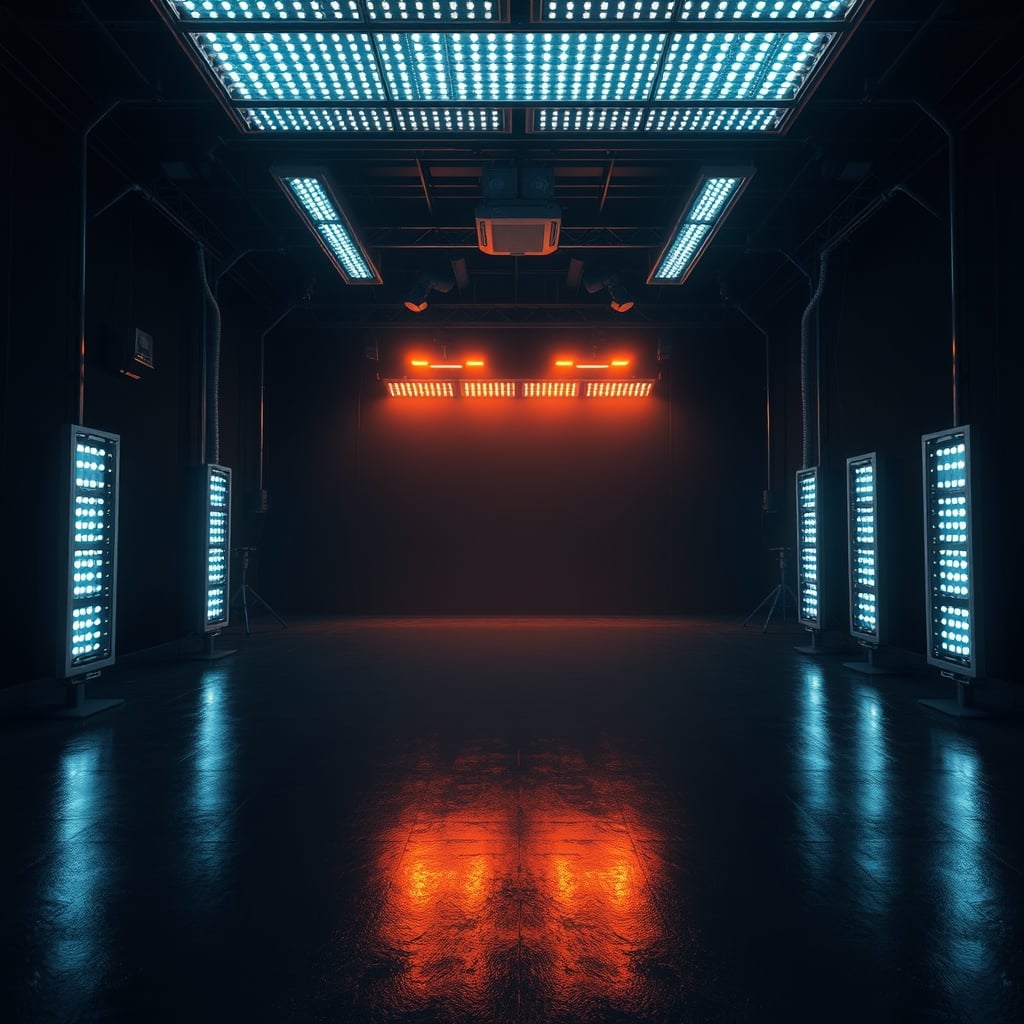
Let's get this out of the way: the dream of ambient light automation—the one sold in sleek ads where lights fade perfectly with the sunset and colors shift to match your mood—is mostly marketing fluff. It's the tech equivalent of a fancy restaurant with tiny portions. It looks incredible on Instagram, but you leave hungry and out eighty bucks.
I know because I built it. I connected strips to hubs, hubs to apps, apps to voice assistants, and voice assistants to my schedule. I had scenes for 'Deep Focus', 'Creative Flow', and 'Wind Down'. For thirty days, I let algorithms control my light. The result wasn't serenity; it was a low-grade, persistent anxiety. The lights never quite did what I wanted, the automations failed at the worst times, and the constant tinkering became a new form of procrastination. The promise of ambient light automation is passive ambiance. The reality is active management.
Most guides get this fundamentally wrong. They focus on the how—which Wi-Fi strip to buy, which app to use—and completely ignore the why. Why are you automating this? To save the two seconds it takes to hit a switch? To feel futuristic? That's not a good enough reason. This tech stack introduces points of failure, latency, and cognitive load that erode the very calm you're trying to cultivate.
The Ambient Light Automation Lie: Complexity Equals Quality
Walk into any tech store in 2026, and you'll see the same story: lighting systems are sold on features. Millions of colors, thousands of scenes, voice control, geo-fencing, music sync. The message is clear: more complexity equals a better experience. This is complete nonsense.
In real use, complexity is the enemy of ambiance. Ambiance is about feeling, not features. When you're trying to relax after a long day, the last thing you want is to open an app, scroll through a palette, and adjust sliders for hue, saturation, and brightness. You want warm, dim, and now. The industry has convinced you that needing a smartphone to control your room's vibe is progress. It's not. It's a regression wrapped in an LED strip.
Users consistently report the same experience: they set up elaborate automations for the first week, show them off, and then never touch them again. The sunrise alarm that's supposed to gently wake you? It's jarring when it triggers on a weekend you wanted to sleep in. The 'movie mode' that dims the lights? It's frustrating when you need to get up for a snack and the room is pitch black. These aren't edge cases; they're the default outcome of over-automating a fundamentally sensory experience.
Why 'Set It and Forget It' Automation Is a Myth That Needs to Die

This is the core misconception poisoning the entire category. The idea that you can program your lights once and enjoy perfect, hands-off ambiance forever is a fantasy. It doesn't work. Your life isn't a computer script. Your mood, the season, the weather, and what you're doing change daily. A rigid automation schedule cannot account for this.
The most common failure point is the circadian rhythm automation—the one that shifts your lights from cool blue in the morning to warm orange at night based on the sun's position. Sounds healthy, right? It's overrated. In practice, if you have any curtains or work in a room without massive windows, the artificial shift feels disconnected from the actual natural light in your space. It creates a subtle sensory dissonance. Your body feels one light temperature from the window, your eyes see another from the LEDs, and your brain gets a confused signal. Based on widespread user feedback, this feature is the first one people disable.
Furthermore, smart ecosystems are brittle. A Wi-Fi hiccup, a hub firmware update, or a server outage on the manufacturer's end can brick your entire lighting scheme. I've had a room go completely dark mid-evening because a routine cloud service my lights depended on had a brief outage. That's not ambiance; that's hostage-taking. Relying on an internet connection for basic room functionality is a design flaw, not a feature.
What Actually Works: Dumb Lights, Smart Control
Here's the real, boring, brutally effective truth: the best ambient light automation involves the least amount of actual automation. Stop thinking in terms of schedules and start thinking in terms of immediate, tactile control. The goal isn't for your lights to read your mind; it's for you to command them without thought.
This is where most people get it wrong. They jump straight to smart bulbs and complex hubs when the solution is simpler and cheaper. A high-quality, high-CRI LED strip connected to a physical, analog dimmer switch provides 95% of the practical benefit with 0% of the headache. The tactile feedback of a knob you turn to adjust brightness is instant, reliable, and infinitely more satisfying than slapping your phone screen. It requires no app, no login, no updates, and works when the internet is down.
For my main bias lighting behind the monitor, I use a basic dimmer. For the broader room fill, another. That's it. Two controls. From pitch black to full brightness to any level in between, instantly. This isn't a compromise; it's an upgrade. The real luxury isn't having seventeen million colors—it's having zero lag between your desire for less light and the room actually getting dimmer.
The Brutal Economics of Color-Changing Lights
Let's talk about the RGB elephant in the room. Do you need millions of colors? No, you don't. This is the industry's biggest lie. For genuine ambient lighting that affects mood and focus, you need precisely two colors: a warm white (around 2700K) and a cool white (around 4000K). Maybe a neutral white (3500K) if you're picky. Every other color in the spectrum is for parties, gaming setups, and YouTube thumbnails.
Think about it. When was the last time you genuinely relaxed in a room bathed in pulsing purple or deep blue? Never. It's unsettling. Studies on color psychology are clear: warm tones promote relaxation, cooler tones promote focus. Green, purple, and red are not ambient colors; they are accent colors. You are wasting money and complicating your system by paying for a color engine you will use twice a year.
Invest in light quality, not light quantity. A strip with a high Color Rendering Index (CRI 90+) that renders accurate, pleasant whites will do more for your room's vibe than a cheap RGBIC strip that can do a rainbow wave. The light that falls on your skin, your furniture, and your book matters. A high-CRI source makes everything look and feel better. A low-CRI source makes everything look sickly and cheap, no matter what color you set it to.
The Single Product That Fixes Most Smart Lighting Problems
If I could mandate one change to every over-automated setup, it would be this: install a physical PWM dimmer switch. I'm not talking about a smart button. I'm talking about a simple, inline rotary knob you install between your power supply and your LED strips.
Products like the Weideer PWM dimmer are dirt cheap and completely transformative. They take the messy, digital problem of brightness control and solve it with analog simplicity. You wire it once, and you get smooth, flicker-free dimming from 0 to 100% without any digital stepping or app latency. This is the 'automation' you actually need—the ability to manually set the exact ambiance you want in real-time, with muscle memory.
The beauty of this approach is its compatibility. It works with any standard 12V or 24V LED strip, smart or dumb. It bypasses the need for a proprietary hub or a flaky app. In a world chasing wireless everything, the reliability of a simple wire and a knob is revolutionary. This doesn't mean you can't have any smart features, but it makes them optional rather than foundational. Your lights work perfectly, every time, with or without your phone.
For related insights on cutting through tech marketing, our piece on Fake USB Hub Specs Are Sabotaging Your Desk Setup exposes similar truths about overhyped peripherals.
Your 'Perfect' Scene is Sabotaging Your Flexibility
Here's a specific, tangible lesson I learned the hard way. I spent an entire afternoon crafting what I called the 'Ultimate Focus' scene. It was a specific, cool white at 40% brightness on the main lights, with a precise teal bias light behind the monitor at 20%. I saved it, automated it to trigger when my calendar said 'Work'.
It was useless by day three. Some days I needed brighter light. Some days the teal felt distracting. Some days I was working on color-sensitive design and needed neutral white. The 'perfect' static scene was, in fact, perfectly wrong for most situations. It locked me into a single lighting state for a dynamic activity.
The mistake was assuming my needs were constant. They're not. Ambiance is a live variable. The best lighting setup isn't the one with the most pre-sets; it's the one that gets out of the way and lets you adjust on the fly without friction. Chasing the perfect automated scene is a trap that leads you to use your lights less, not more.
This obsession with pre-configuration plagues all smart home tech. For another example of how pre-set solutions fail, see Smart Notebook Problems Are Sabotaging Your Productivity.
The Final Verdict: Skip the Hype, Grab a Dimmer
After a month of living with and then dismantling my hyper-automated lighting rig, the conclusion is straightforward.
Ambient light automation, as sold by the big smart home brands, is overrated. It's a solution in search of a problem that adds layers of cost, complexity, and frustration for minimal gain. The pursuit of hands-off, intelligent light leads to hands-on, constant troubleshooting.
Worth it: High-quality, high-CRI white LED strips. Simple, physical PWM dimmer switches. This combination gives you reliable, beautiful, and instantly controllable light. It's the 95% solution that works 100% of the time.
Skip it: Multi-hub ecosystems, circadian scheduling apps, and RGB for ambiance. These are gimmicks that degrade the core experience. They are toys, not tools.
Your room's light should serve you, not the other way around. Ditch the apps, kill the automations, and put a real knob on your wall. The ambiance you save will be your own.
Frequently Asked Questions
Is ambient light automation worth it in 2026?
For most users, no. The complexity, cost, and reliability issues introduced by full smart home automation for lighting outweigh the minor convenience benefits. A simple dimmer switch provides more reliable control for creating ambiance.
What's the biggest mistake people make with smart lighting?
Over-automation. Trying to program every light change based on time or activity creates a rigid system that fails to adapt to your real, dynamic needs. It adds frustration when automations fail or don't match your mood.
Do I need RGB lights for good ambiance?
Absolutely not. For genuine, relaxing ambiance, you only need tunable white light (warm to cool). RGB colors are for accent and entertainment, not for daily mood lighting. Investing in high-CRI white LEDs is far more important.

Written by
From bias lighting behind your monitor to smart RGB ecosystems, Leon knows exactly how to light a room for productivity during the day and gaming at night.
Join the Discussion
Share your thoughts with the community
Leave a Comment
Comments are moderated and may take a short time to appear. Links are not permitted.